Step-Up in Basis and Taxes on Inherited Property in California
By Doug Ranger, Broker/Owner, Ranger Realty
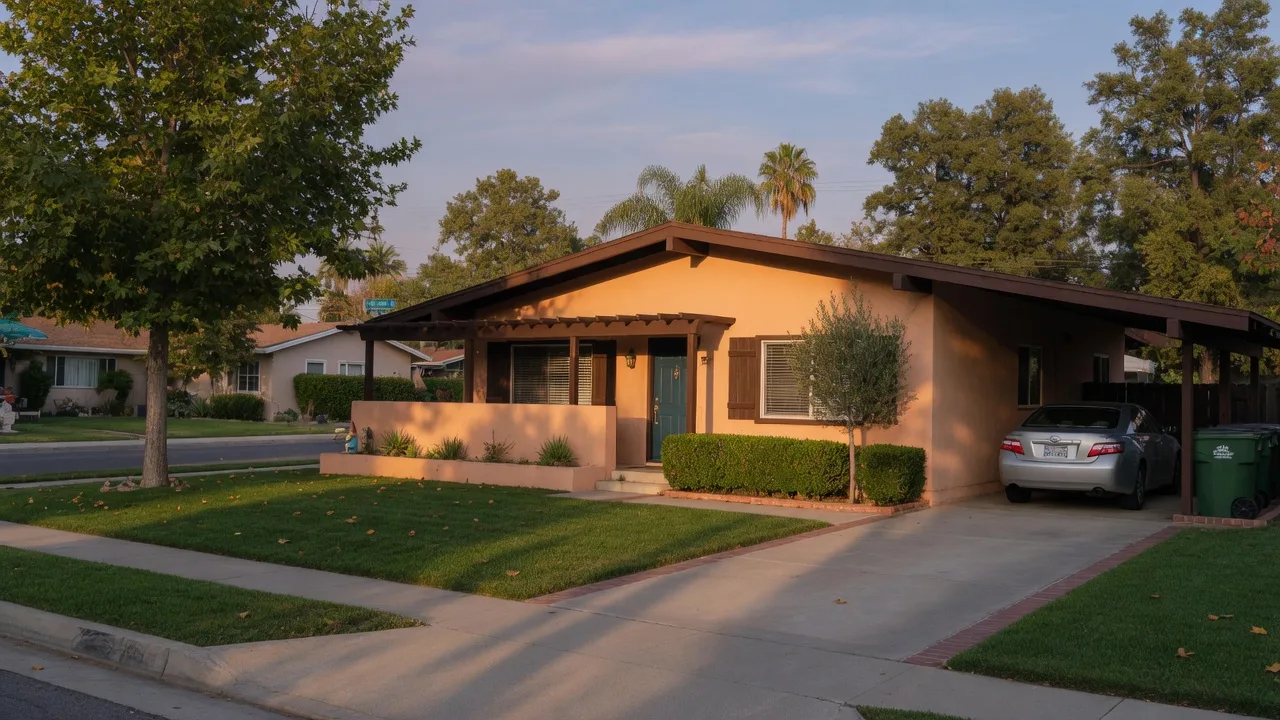
When a family inherits a home in Southern California, one tax rule matters more than almost any other: the step-up in basis. This single rule explains why so many heirs can sell an inherited house with little or no federal capital gains tax, even in markets like Thousand Oaks, Ventura, the San Fernando Valley, and Orange County where homes appreciate steadily. This guide explains how stepped-up basis works, how California's community property rules can extend the benefit, and which taxes do still apply when an inherited home is sold.
The aim here is to help families understand their position before they make decisions. Tax law changes, and no article can replace a conversation with a qualified tax professional about your specific situation. What follows is a clear, accurate starting point, written plainly and without pressure.
What Stepped-Up Basis Means for an Inherited Home
Under federal law, when you inherit property, your tax basis is not the price the previous owner paid decades ago. Instead, the basis steps up to the property's fair market value on the date of the owner's death. California follows the same federal rule, so the same benefit applies to homes here.
To see why this matters, consider a home purchased in the 1970s for $80,000 that is worth $900,000 at the owner's death. If the buyer of that home were selling property they had owned at that original price, they would face capital gains on roughly $820,000 of appreciation. But an heir who inherits the home receives a new basis of $900,000, the value on the date of death. Selling soon afterward at or near that value produces little or no taxable gain, because the appreciation that built up during the owner's lifetime is not taxed at the federal level when it passes to an heir.
This is the reason many families in cash-in, equity-rich California communities are able to settle an estate by selling the family home without a large federal income tax bill. The step-up in basis does not erase taxes in every case, but it removes the burden of the owner's lifetime appreciation for most heirs.
California's Community Property Advantage
California is a community property state, and that brings an added benefit for surviving spouses that heirs in most other states do not receive. When one spouse dies, the surviving spouse's basis in both halves of a community property home resets to its fair market value on the date of death. This is sometimes called a double step-up, because it allows the surviving spouse to reset the basis not just on the deceased spouse's half, but on their own half as well.
The practical effect is that a widow or widower who later sells the family home still holds the full stepped-up basis on the entire property. In a common-law state, the surviving spouse would keep their original (often much lower) basis on their own half, leaving a larger taxable gain when the home was eventually sold. For couples who built their home decades ago, the difference can be significant.
When Heirs Sell: Capital Gains and Rates
If you sell an inherited home, the taxable gain is your sale price minus your stepped-up basis, with selling costs such as commissions and closing fees reducing the gain further. A helpful detail: for inherited property, the gain is always treated as long-term, regardless of how long you have owned it. That means the more favorable long-term capital gains rates apply rather than the higher short-term rates.
Federal long-term capital gains are taxed at 0%, 15%, or 20%, depending on your taxable income. For 2026, for example, a single filer in the 0% bracket earns up to about $49,450 and a married couple filing jointly up to about $98,900 before the 15% rate begins; the 15% bracket extends to roughly $545,500 for single filers and $613,700 for married couples filing jointly, with the 20% rate applying above those thresholds. Higher-income filers may also owe the additional 3.8% Net Investment Income Tax. These figures adjust each year, so they are best treated as guidance to verify with a tax professional, not as a substitute for planning.
On the state side, California has no estate or inheritance tax, which is a relief for many families. However, California treats capital gains as ordinary income and taxes it at the state's top marginal rate, which is much higher than the federal long-term rate. A meaningful portion of any post-inheritance gain can go to state income tax, which is why understanding your basis and planning the timing of a sale matters.
The Home-Sale Exclusion, and Why It Often Does Not Apply
Homeowners are sometimes surprised to learn that the familiar $250,000 (single) or $500,000 (married) home-sale tax exclusion usually does not shield an inherited home. To qualify, you must have owned and used the home as your principal residence for two of the five years before the sale. An heir who inherits a home and sells it quickly, without having lived there for that period, generally cannot claim the exclusion on the sale of the estate property.
The good news, as described above, is that the step-up in basis often means there is little gain to shelter anyway. But if an heir chooses to move into the inherited home and make it their primary residence for two out of five years, then sells, the exclusion can become available. Each heir should weigh their own plans against both the stepped-up basis rule and the exclusion in conversation with a tax professional.
California Property Taxes and Proposition 19
Beyond income tax, California has its own rules for property taxes, and Proposition 19 changed them. Before Proposition 19 took effect in February 2021, a parent-to-child transfer of a family home could generally keep the parent's low Proposition 13 assessed value. Under Proposition 19, that generous treatment now applies only in specific circumstances.
- Only the parent's principal residence qualifies for the parent-child transfer exclusion; rental, vacation, and investment properties are reassessed to market value
- The child must move into the inherited home and make it their primary residence within one year of the transfer, and must file for the homeowners' exemption
- The exclusion is capped: for the 2025 to 2027 period, the home's market value cannot exceed the parent's base-year value by more than the indexed cap, currently just over $1 million
The impact on an heir is direct. If a child keeps the inherited home as their primary residence and the value falls within the cap, they can keep the parent's lower assessed value and property tax bill. If the child does not move in, for example by renting the home or leaving it vacant, or if the home is sold, the parent-child exclusion is lost and the property is reassessed to full market value, which can raise the property tax bill sharply.
Prop 19 also changed how certain homeowners, including those 55 and older, can transfer their assessed value to a replacement home when they move, but for most heirs the practical question is whether they intend to keep the family home as their own residence or sell it. That intent, more than almost anything else, determines the property tax outcome.
Three Steps to Take as an Heir
If you have inherited (or expect to inherit) a home in Southern California, a few early steps will put you in a stronger position:
- Establish the date-of-death value of the property, through an appraisal or a well-supported comparative market analysis, because that value becomes your basis
- Talk with a qualified tax professional and a California probate attorney about your specific situation, including capital gains, Proposition 19, and whether you plan to keep or sell the home
- Decide, with clear information, whether the family intends to keep the home, rent it, or sell it, and let that decision guide the property tax and real estate planning
These steps do not need to be rushed, and each family's answer will look different. The value of getting the facts straight early is that it protects the choices available to you later.
Common Questions Heirs Ask About Taxes
Is there a tax bill just for inheriting a home?
Generally, no. California has no inheritance or estate tax, and the federal estate tax only reaches very large estates. Receiving an inherited home is not itself a taxable event. The tax questions arise later, when the home is sold or, on the property tax side, when ownership is transferred and assessed value is recalculated.
What about a rental or second home in the estate?
The step-up in basis applies to any inherited asset, including rentals and second homes, so capital gains exposure on sale is still reduced to appreciation after the date of death. But under Proposition 19, the parent-child exclusion from reassessment applies only to a parent's principal residence, not to rentals, vacation homes, or other investment property. Those properties are reassessed to market value when they transfer, which is an important distinction for estates that include such holdings in addition to a family home.
Should we sell or keep the home?
That is a personal decision that depends on family circumstances, finances, and tax position. Keeping the home involves the Proposition 19 residency requirements and the carrying costs of ownership. Selling allows the estate to settle cleanly and heirs to move forward, and the step-up in basis usually means little federal capital gains tax at sale. Talking through both paths with a tax professional and a real estate advisor who works with estates is the best way to arrive at an answer that fits your family.
Selling an Inherited Home in Southern California
If you decide that selling is the right path, working with an agent who understands estate and trust sales makes a real difference. Inherited and probate properties have their own timelines, paperwork, and sometimes a court confirmation process, and a professional who handles them regularly can keep the process moving without putting pressure on you.
Doug Ranger, Broker/Owner of Ranger Realty, has guided probate and trust sales throughout Southern California since 1997. He is a Certified Distressed Property Expert (CDPE) and has built his practice on the belief that education comes first. He will help you understand the value of the home, the options available, and the tax and practical considerations, so you can make confident decisions without feeling rushed.
Guidance, Without Pressure
Inheriting a home is as much an emotional matter as a financial one, and you do not have to work through it alone. Doug offers a free, no-obligation consultation to families and executors throughout Southern California. He will listen to your situation, help you understand the steps ahead, and refer you to the tax and legal professionals who complete your team.

Doug Ranger
Broker/Owner, Ranger Realty. Licensed since 1997. Certified Distressed Property Expert (CDPE) specializing in probate, trust, and inherited property sales throughout Southern California.
Questions About an Inherited Home?
Doug offers a free, no-obligation consultation for families, executors, and trustees navigating inherited property in Southern California.